VALLES CALCHAQUÍES - 16th edition
April 17–23, 2027
An experimental textile journey through the Upper Calchaquí Valley, where weaving, black pottery, and natural dyes remain alive in the hands of those who have preserved them from generation to generation.
ABRA travels to transform: an experience that momentarily takes us away from the ordinary and immerses us in action and tradition, guided by those who create, practice, and live this wise ancestral culture.
We’ll travel along the Cuesta del Obispo and through Los Cardones National Park on our way to Seclantás—the birthplace of the Salta poncho—to settle in El Colte, the village where more than 25 artisan families have been honoring the loom from generation to generation.
The experiences of this trip
Cuesta del Obispo Trail
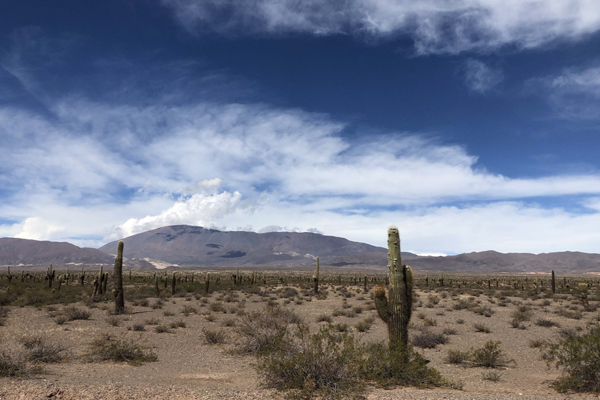
Piedra de Molinos and Los Cardones N. Park
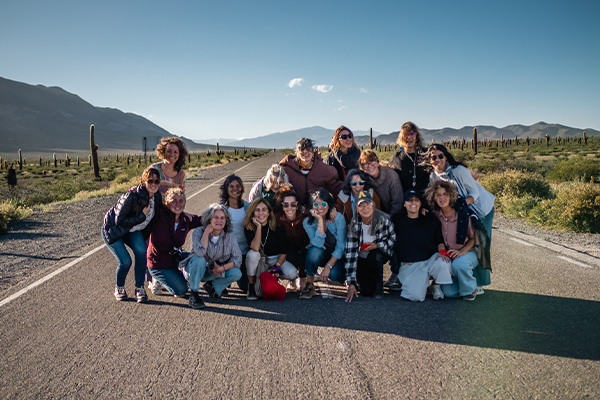
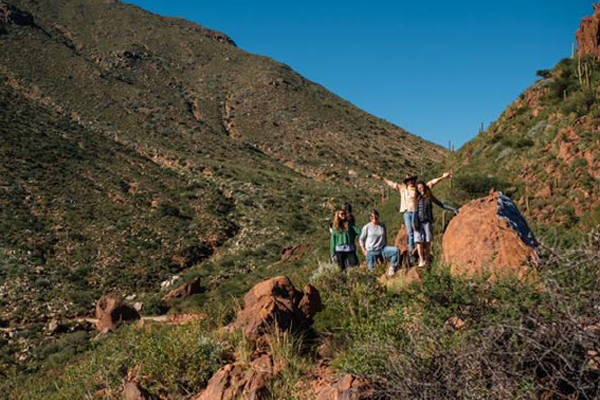
Experience the landscape of the Calchaquí Valley, with stops at Piedra del Molino and Los Cardones National Park, accompanied by our guide. On the road connecting the city of Salta with Seclantás, we encounter the impressive Cuesta del Obispo and Los Cardones, a winding route that descends to the Tin Tin straightaway—a perfect 18-kilometer stretch in a straight line: a mindful look at the geographical environment that has been, and continues to be, a spiritual and material source of sustenance for generations of artisans.
Seclantás
The birthplace of the Salta poncho
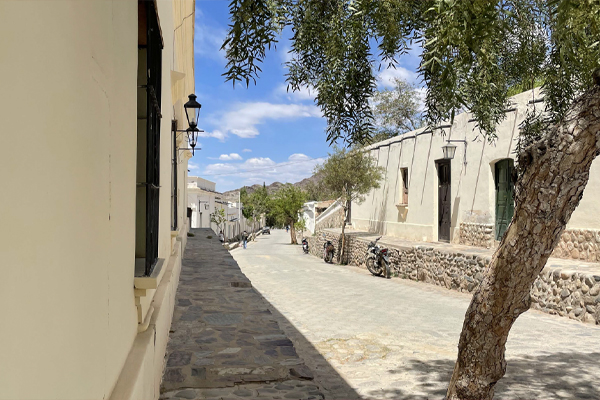
Amid mountains, valleys, and ravines lived the Diaguitas—“people who live among the mountains”—speakers of the Cacán language. The Calchaquí Valley was inhabited by several tribes, each with its own chief; where Seclantás stands today lived the tribe whose chief was named “Seclanta.” Located in the center of the valley, 150 km southwest of the city of Salta, this is where we’ll sit under the trees to listen to the stories told by the artisans as they weave their dreams into the warp of a tapestry or a poncho.
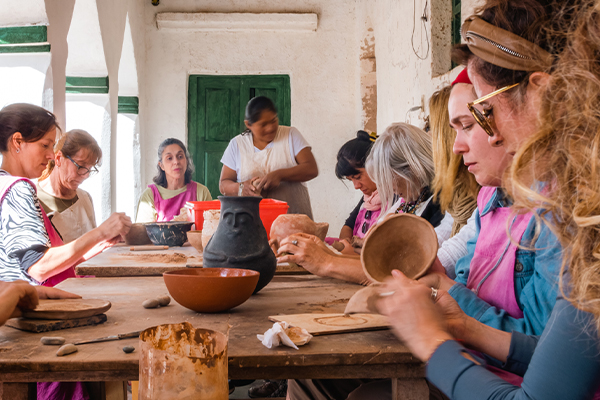
Pottery Workshop
El Colte, by Anicia Figueroa
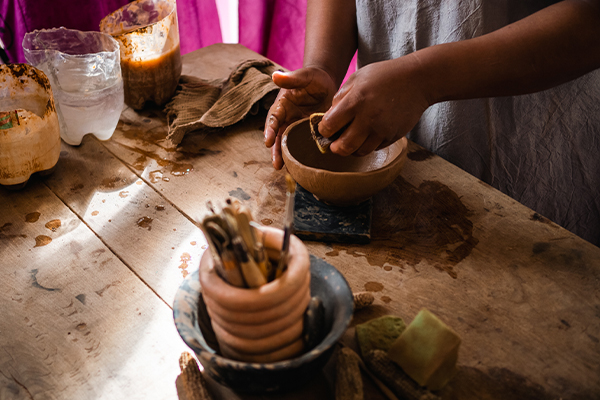
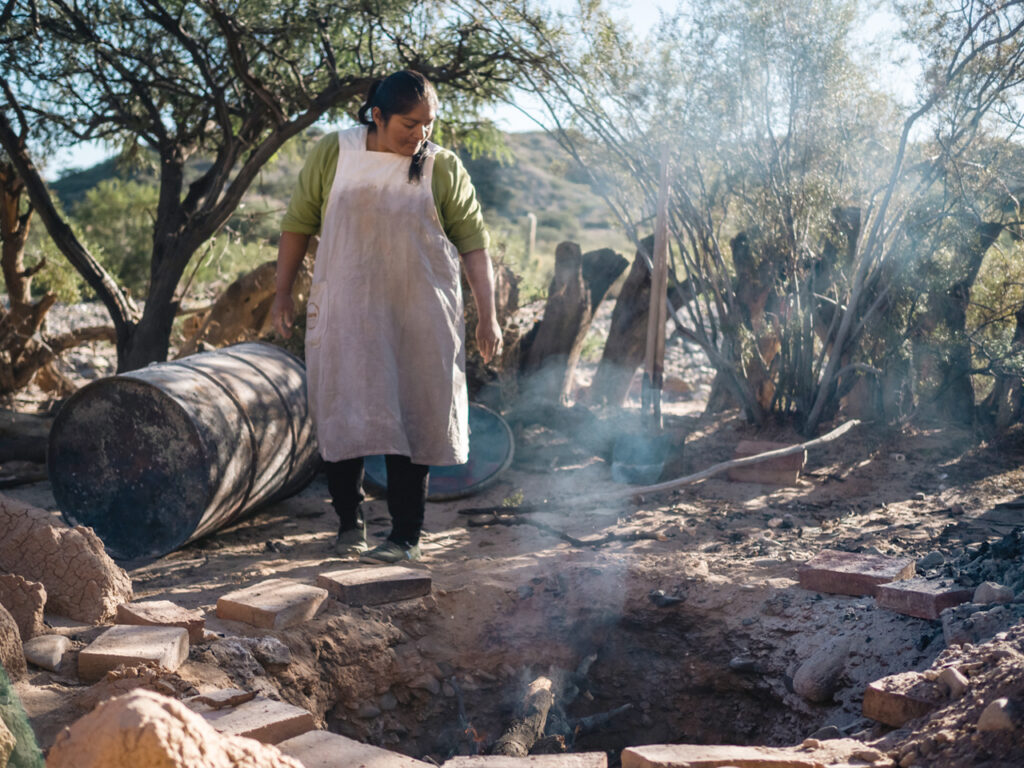
Calchaquí pottery: Black pottery gets its color from the firing process, not from the clay, engobes, pigments, or glazes. It is a millennia-old tradition (7th/8th century) in which the piece is placed in a pit where a fire is lit with pitch-soaked branches and manure until the temperature reaches 800 degrees.
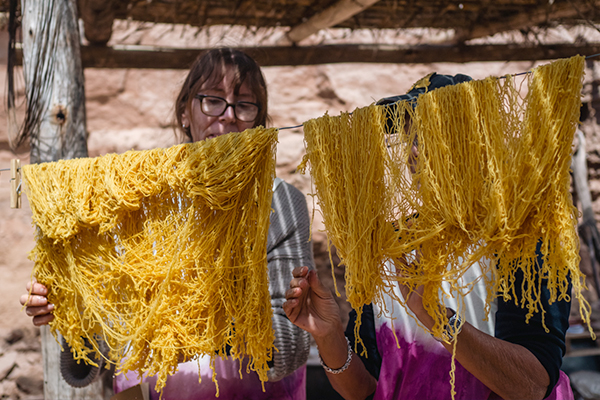
Natural Dyes Workshop
El Colte, the Artisans' Trail
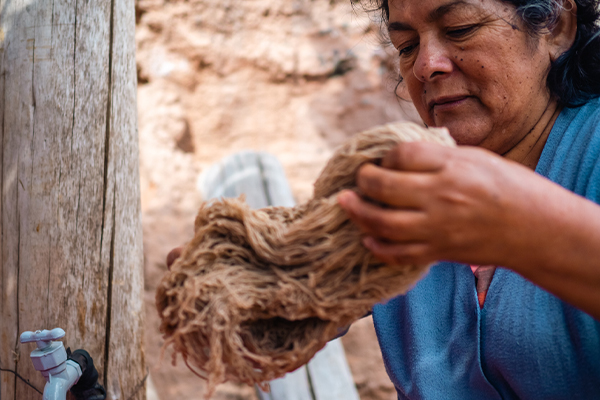
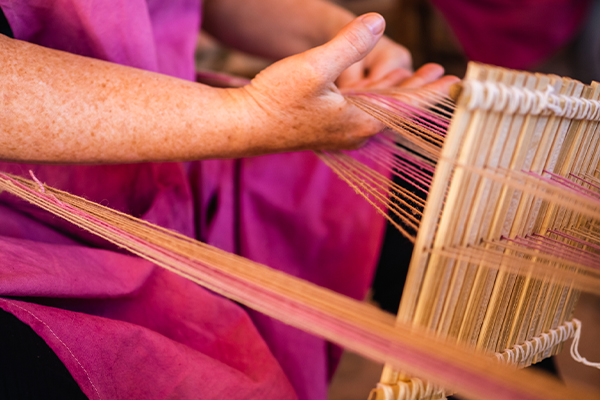
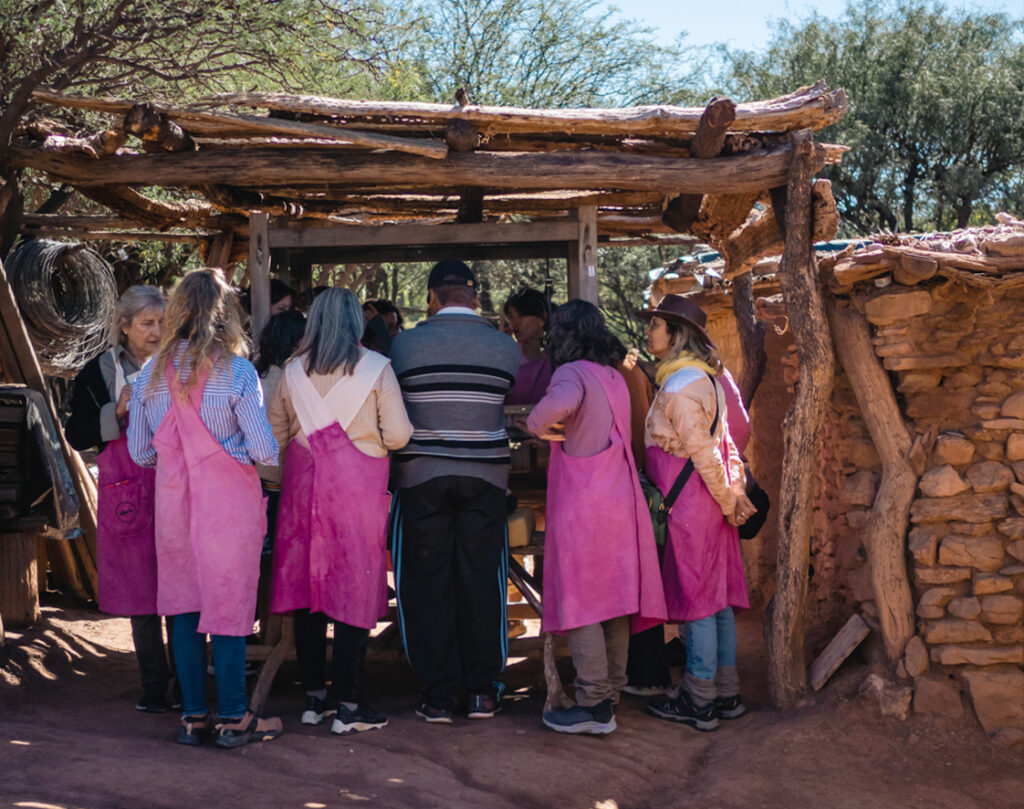
Together with the Gonza family, we’ll share a day of knowledge, traditions, and crafts: natural dyes are derived from agricultural products—chili peppers, onions, and walnuts. Outdoors, we’ll dye natural sheep’s wool yarn alongside Silvia and Silvina Gonza, learning how to prepare the fibers and work with walnut shells, and marveling at the wide range of shades they offer.
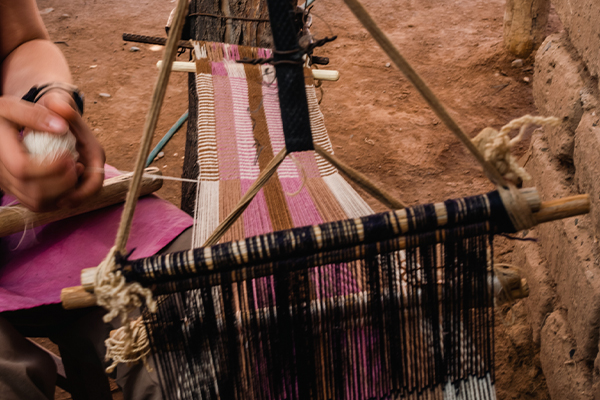
Plantado loom or criollo loom
El Colte, the Artisans' Trail
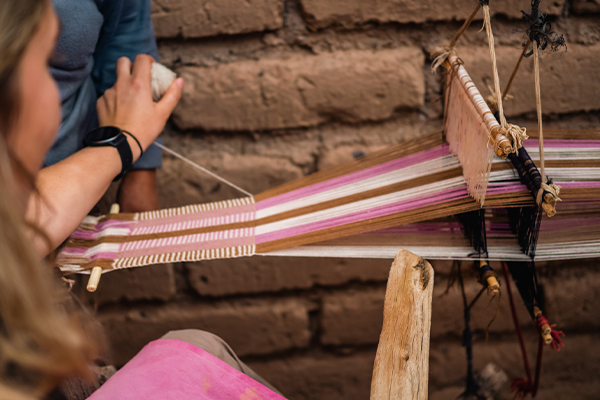
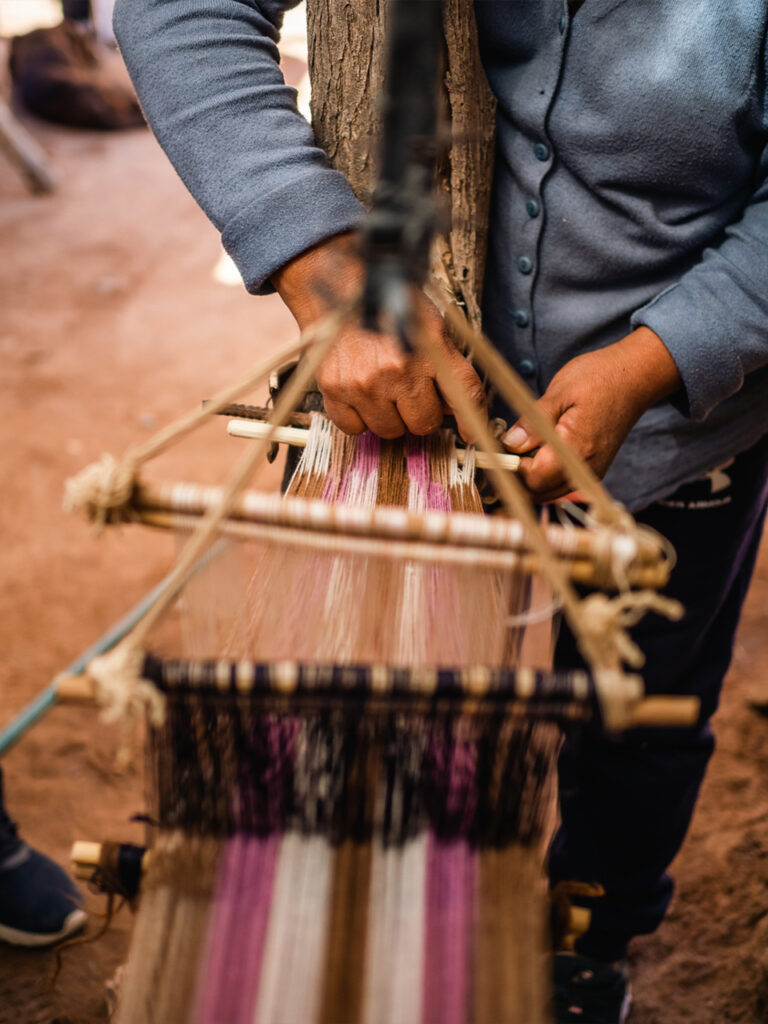
Where the sky meets the hills, a group of families of skilled artisans preserves a very unique craft. The looms set up in each home along the artisans’ trail are built from logs, sticks, and stones found right at their fingertips. We’ll learn how to use the tools for the different types of looms and prepare their warps, guided by the Gonza women.
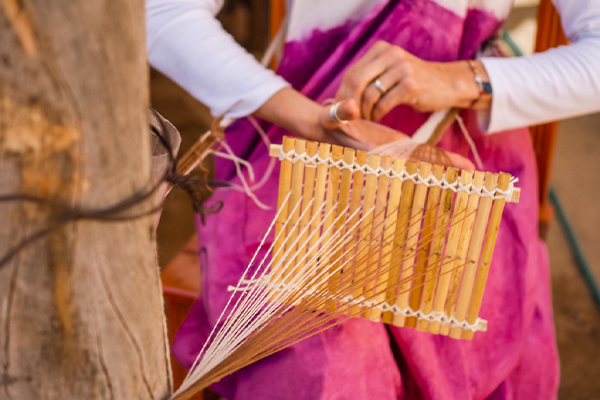
Loom with a waist belt
El Colte, the Artisans' Trail
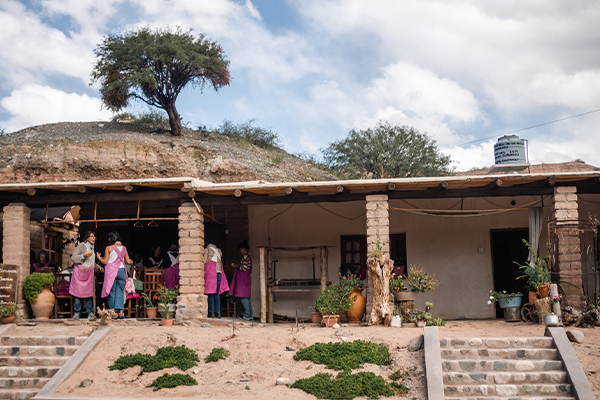
The artisans’ community of El Colte, a village in the Upper Calchaquí Valley running parallel to National Route 40, is made up of more than 25 families who have dedicated themselves to weaving from generation to generation. The traditional Salta poncho, in vibrant red with black trim, is crafted by these very hands. Beyond their outstanding work, we are grateful for the invitation into their homes, courtyards, and corrals to experience the entire process firsthand.
Visit to Héctor Guaymás's Workshop
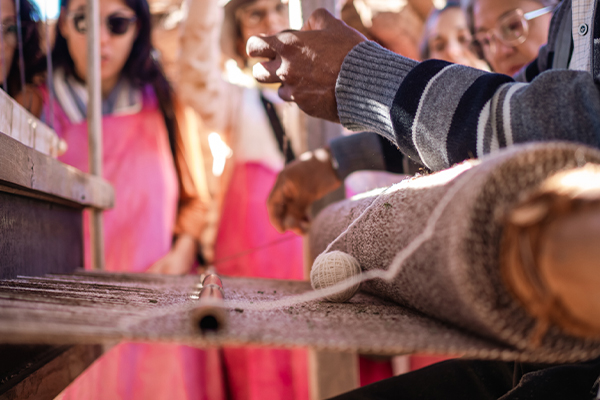
Barracán weaver
The Guaymás family lives in a place where the trails blend into nature and time seems to stand still. Héctor is a weaver like few others: his ancestral weaving technique is truly marvelous. The barracán is a hybrid textile, the result of blending ancestral weaving techniques with the European looms brought by the colonizers. We’ll share with him the stories of his history and his way of being in the world.
Visit to Brealito Lagoon
The lagoon takes its name from the brea, a tough shrub that grows in the surrounding area and is used for kindling. It is located 20 km from National Route 40 and 8 km from Seclantás, surrounded by the Luracatao hills.
ITINERARY
DAY 1 • SATURDAY, APRIL 17
Morning: ABRA TEXTIL meets the group at the Salta airport. Lunch in the town of Chicoana.
Afternoon: Trip to Seclantás, with stops at Piedra del Molino and Los Cardones National Park.
Evening: Dinner at ABRA.
DAY 2 • SUNDAY, APRIL 18
Morning: Pottery workshop led by Anicia Figueroa at El Colte. Artisan Trail. ABRA lunch at Anicia’s home.
Afternoon: Conclusion of the pottery workshop.
Evening: Welcome dinner.
DAY 3 • MONDAY, APRIL 19
Morning: Natural dyeing workshop led by artisans from El Colte. ABRA lunch in El Colte.
Afternoon: Workshop on warping a planted loom.
Evening: ABRA dinner.
DAY 4 • TUESDAY, APRIL 20
Morning: Planting loom workshop and backstrap loom workshop led by the Gonza women. ABRA lunch at El Colte.
Afternoon: Traditional clay firing in the Calchaquí style.
Evening: ABRA dinner.
DAY 5 • WEDNESDAY, APRIL 21
Morning: Visit to Brealito Lagoon and the workshop of Héctor Guaymás, a master weaver of barracán.
Evening: Free time, with an ABRA event in the town of Molinos.
DAY 6 • THURSDAY, APRIL 22
Morning: Backstrap loom workshop led by Silvina, Marcela, and Silvia. Farewell lunch for the artisans at El Colte.
Afternoon: Transfer to Cachi. Wine tasting at Bodega de Isasmendi.
Evening: Free time to enjoy the stars.
DAY 7 • FRIDAY, APRIL 17
Morning: Free time in Cachi. Lunch on your own. Transfer to the Salta airport and return home.
VALLES CALCHAQUÍES - 16th edition
- Duration: 6 nights / 7 days
- Dates for 2027: April 17–23
- Meeting point: Salta Airport
- Group size: 10 to 17 participants maximum
- Requirements: Must be 18 years of age or older. No prior knowledge of the techniques is required.
- Total price: 1,780 USD for residents / 1,930 USD for non-residents
- Reservation deposit: 700 USD
- Payment methods: Cash / Wire transfer / Bank deposit
- 10% discount for cash payments
- Contact us for availability / single room supplement.
- Residents of Brazil: contact the ABRA agent in Brazil
We confirm the trip once we reach the minimum number of participants required. At that point, we’ll ask you to pay the remaining balance; if the trip isn’t confirmed, we’ll refund the full amount of your reservation.
That’s why it’s important to wait for our confirmation before purchasing your airline ticket.
You can read the full details in our cancellation policy.
Email: abratextil@gmail.com
WhatsApp: 011 6265 1978
Where will we stay?
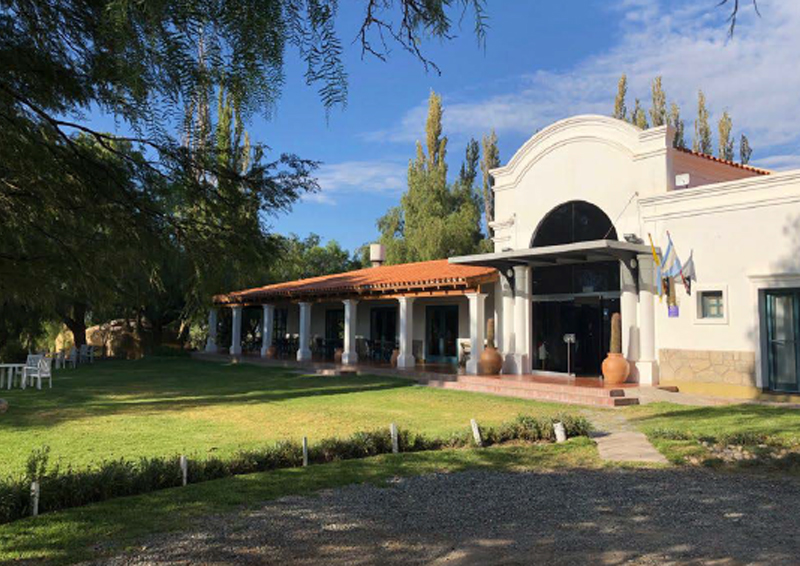
El Capricho, Secantlás
Hostería Automóvil Club Argentino
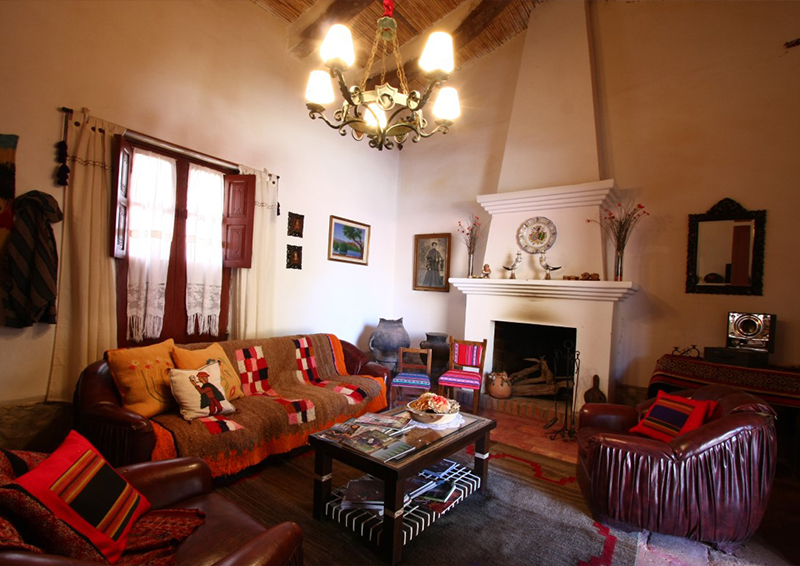
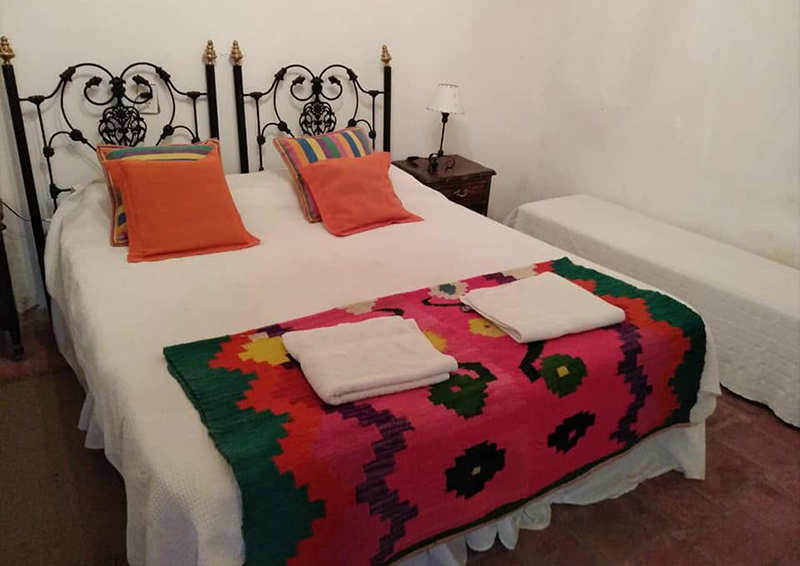
1. Seclantás: Double or triple shared room with a private bathroom at El Capricho—a colonial-style inn with just a few rooms, run by its owners and located two blocks from the plaza—and La Rueda.
2. Cachi: Automóvil Club Argentino Inn, featuring neocolonial architecture, located on a natural balcony overlooking the Calchaquí Valleys and surrounded by a beautiful garden.
What's Included
- Experiences and workshops
- Workshop materials + ABRA Kit
- Accommodations: 6 nights / 7 days — shared double or triple room with private bathroom in Seclantás (El Capricho and La Rueda) and in Cachi (Hostería ACA)
- Breakfast every day
- Homemade and regional lunches in Seclantás and El Colte
- All dinners, except for the one on the free day and the last night in Cachi
Wine tasting at Bodega de Isasmendi, Cachi - Ground transportation to and from the Salta airport, and to all activities on the itinerary (does not include transportation on the free day—Day 5)
- Intermittent WiFi
- Personal accident insurance
Does not include
- Flight ticket
- Health insurance and/or private health plan (required)
- Lunches and/or dinners on free days or during free time
- Alcoholic beverages and soft drinks
- Tour of Molinos and Luracatao (check price and details)
- Tips
The itinerary and activities are subject to change, usually due to weather conditions or new opportunities that arise and that we consider will enhance the experience.