Stories from our territory
voices and hands weaving tales
At ABRA, we celebrate the knowledge that is passed down from generation to generation.
Each artisan holds in their hands the memory of the land, the ancestral techniques, and the creativity that brings each piece to life.
Here we share their stories so that you can get to know those who keep traditional crafts alive and teach us to view culture and nature with respect and wonder.
Anicia Figueroa
El Colte, Salta · Calchaquí black pottery
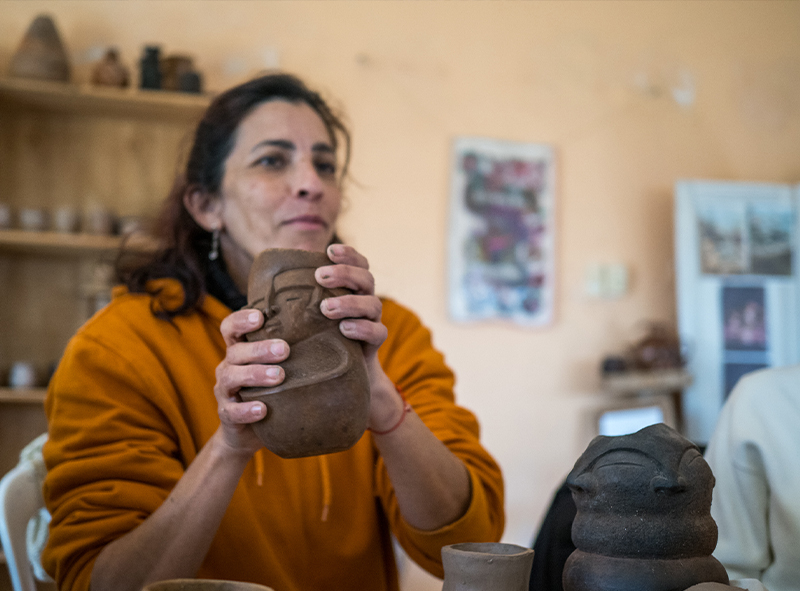
Anicia Figueroa works with Calchaquí pottery, an ancient indigenous tradition dating back to the 7th and 8th centuries. The black ceramic is obtained using a particular firing technique, where the color comes from the process itself and not from the color of the clay, nor from the addition of engobes, pigments, or glazes.
The pieces are fired in a pit over a high heat, using branches of brea and manure to reach high temperatures. An ancestral craft that preserves the link between material, time, and territory.
Embroiderers of the Caspalá Valley
Hornaditas, Jujuy · Andean embroidery
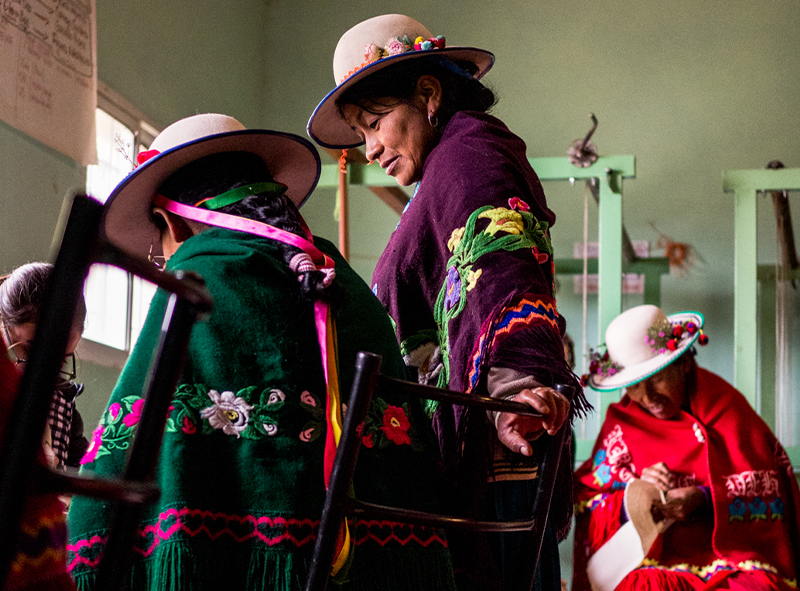
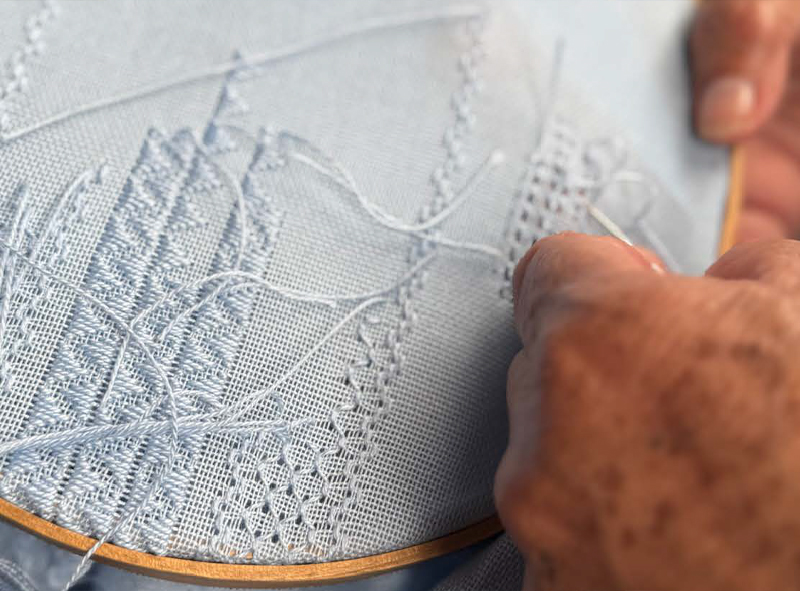
The embroiderers of Caspalá preserve and pass on the art of Andean embroidery, an ancestral skill that is passed down from mothers to daughters and brings the rebozo to life. In Hornaditas, a small village next to the Rio Grande, they share this craft in dialogue with the land and its history.
From the warmth of her home, Clarita welcomes those who come to share time, work, and daily life: embroidery, knowledge, and the experience of living in a place where tradition is still alive.
Mbyá Pindó Poty Community
Misiones · Guaraní basketry and wood carvings
This community, belonging to the Mbyá Guaraní people, is the repository of ancestral knowledge that has been passed down from generation to generation. Their crafts reflect a worldview in which nature, culture, and craftsmanship are closely linked.
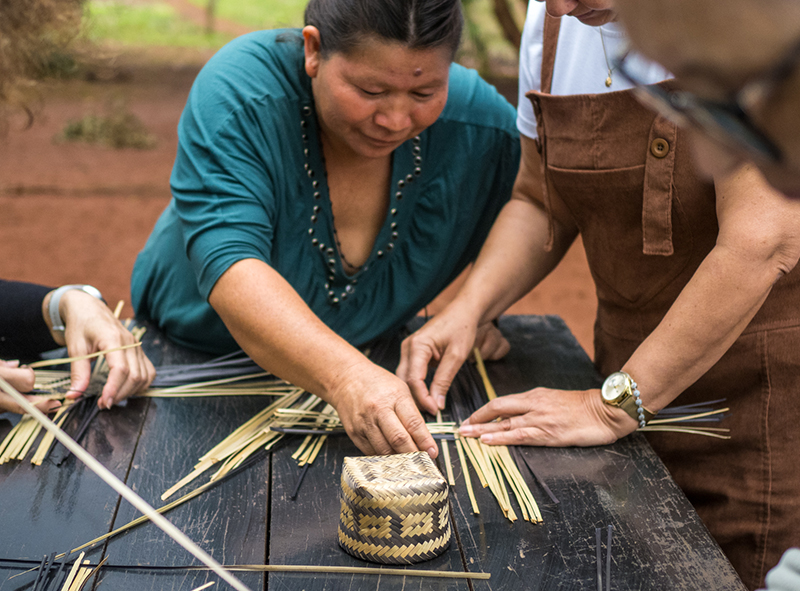
The women make baskets and hampers from natural fibers such as tacuapí and tacuarembó, using traditional techniques and dyes obtained from plants in the area. Wood carving, meanwhile, gives shape to animals native to the jungle, crafted from sustainably harvested wood using traditional engraving techniques.
Qomlec Community
Ingeniero Jaurez, Formosa · Toba Weaving
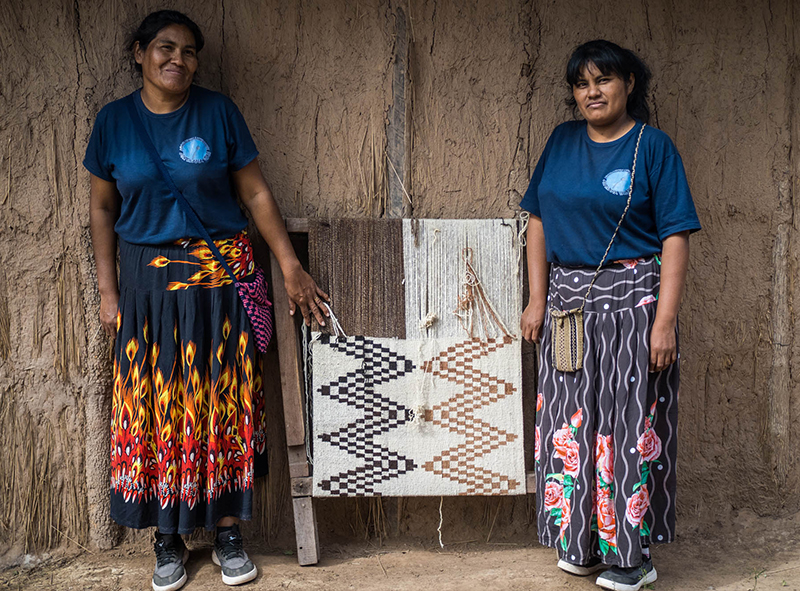
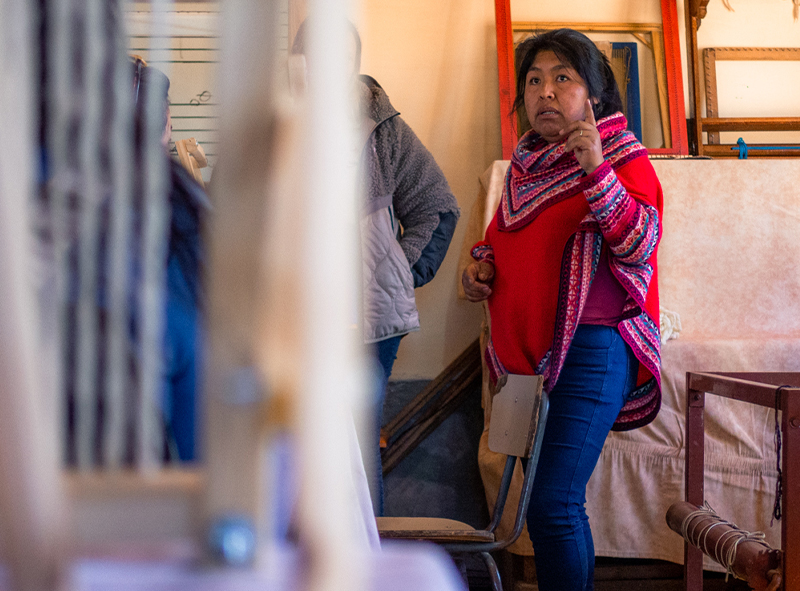
The Qomlec community of KM 30, in Ingeniero Juárez, preserves the ancestral art of Toba weaving on looms. Its artisans pass down their knowledge from generation to generation, combining loom skills with the creation of traditional designs that reflect the culture and identity of their people.
Each piece created expresses the memory, territory, and dedication of those who keep this craft alive, connecting technique, history, and creativity in every thread.
Gonza Family
El Colte, Salta · Natural dyes, Criollo loom, and Waist loom
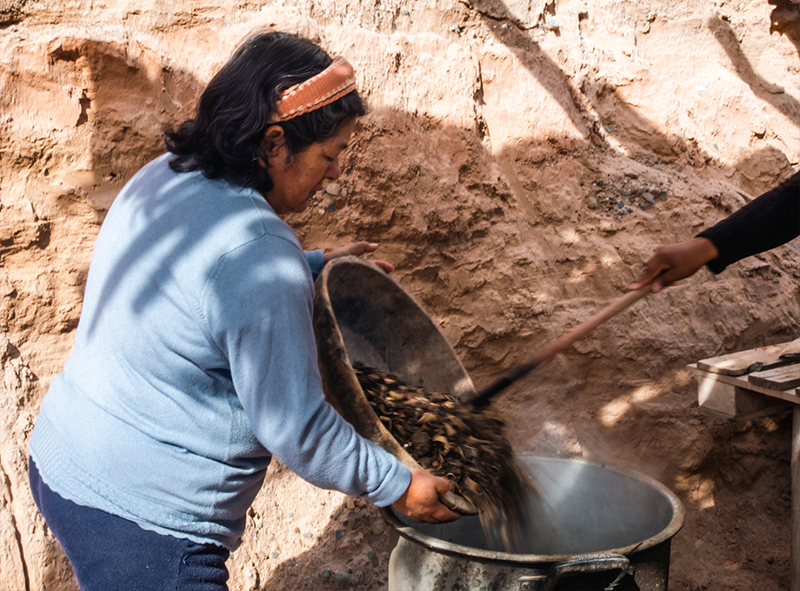
The Gonza family shares knowledge related to natural dyeing and weaving, crafts deeply rooted in the daily life of the region. Their dyes come from agriculture and the environment—chili peppers, onions, and walnuts—while looms are a part of every home along the way.
Through the work of Silvia and Silvina Gonza, the processes of fiber preparation, dyeing sheep wool yarn, and weaving on a Creole loom and a backstrap loom are passed on. This learning takes place in the open air, guided by the craft and experience of these artisan women.
Entre Mujeres y el Barro
Misiones · Guaraní pottery
A collective of women who work with ceramics made from ñau clay, a gray clay native to the Misiones region. Their practice is inspired by pre-American techniques and revives traditional knowledge from the Guaraní culture.
Ñau clay, extracted by hand near the Paraná River and lagoons in the region, is the starting point for pieces that are born from a connection to the land. Each object reflects a shared process, where working with the hands becomes a living memory and collective expression.
Punha Cooperative
Abra Pampa, Jujuy · Natural dyes
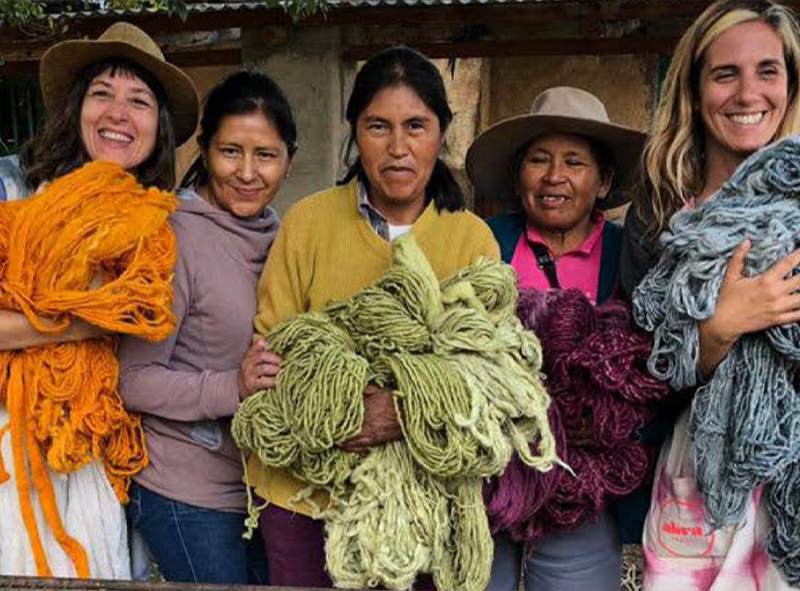
The Punha Cooperative brings together artisans who work with natural dyes in the Abra Pampa region, 3,484 meters above sea level. Their expertise stems from a deep connection with the environment and knowledge passed down within the community.
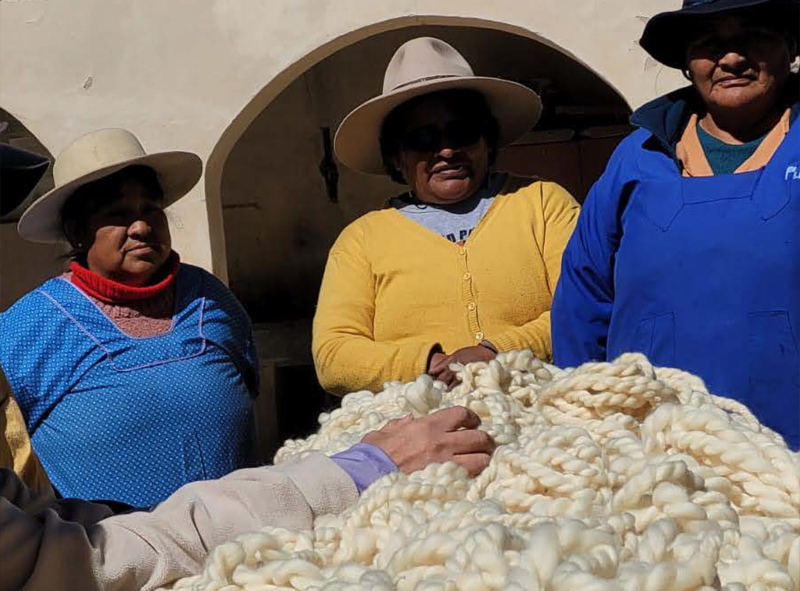
Through their work with sheep and llama fibers, they share the processes of preparation, collection, and dyeing with local plants, inviting others to learn about the virtues of each species and the time required for the craft of artisanal dyeing.
Pilagá Community
Campo del Cielo, Chaco · Traditional basketry
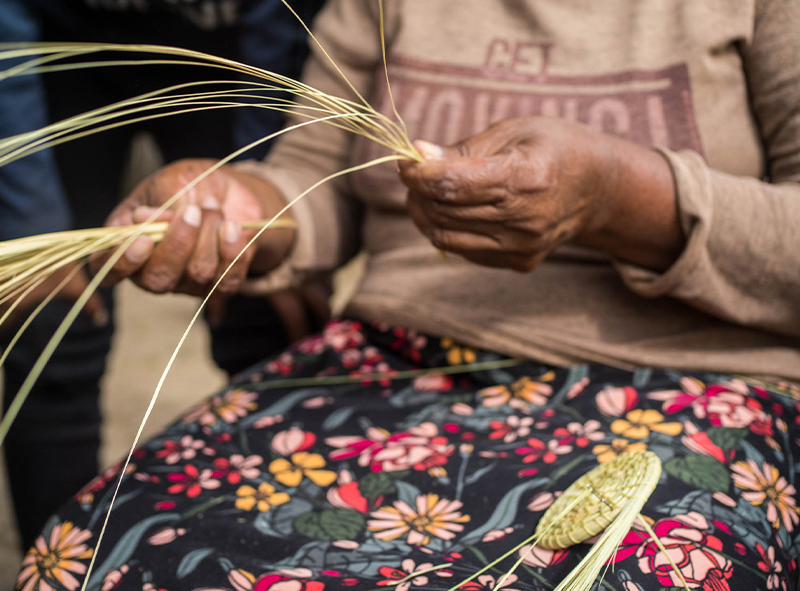
The Pilagá community of Campo del Cielo preserves and transmits ancestral basketry knowledge, working with natural fibers such as carandillo using techniques that have been practiced for generations. Its artisans shape baskets and objects that reflect the richness of the territory and the memory of their culture.
Each piece embodies the knowledge of the land, the fiber, and the skill of those who create it, connecting tradition, identity, and craftsmanship in every weave.
Héctor Guaymás
Salta · Barracan fabric
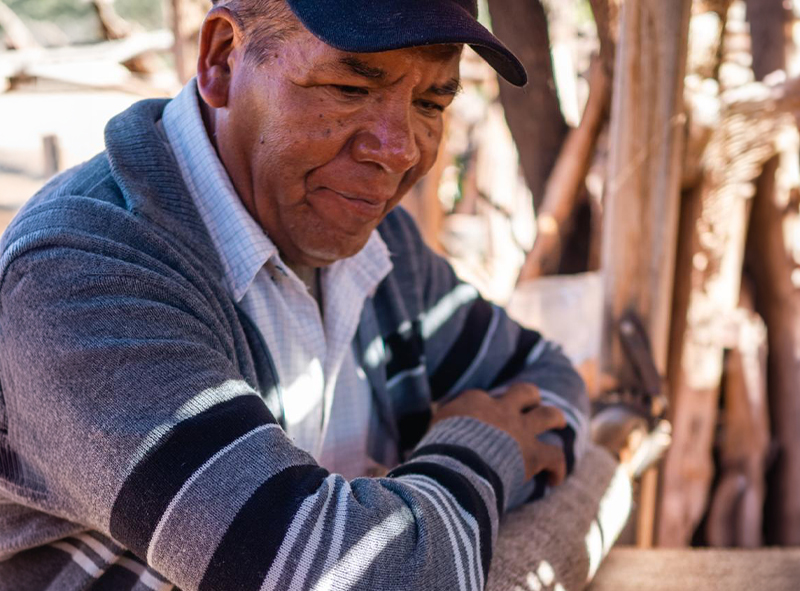
In a land where roads merge with nature and time moves at a different pace, lives the Guaymás family. There, Héctor carries on an ancient craft: weaving barracán.
A master weaver, he uses an ancestral technique that combines indigenous knowledge with the heritage of European looms, bringing to life unique textiles that are deeply connected to his history and his way of inhabiting the world.
Meeting Héctor is also an encounter with his stories and with a dignified and sensitive way of understanding the craft.
Cristina Bordoli & Eliodoro Martínez
Alberdi, Paraguay · Ñandutí and traditional basketry
In the border town of Alberdi, we discover two crafts that preserve the memory and identity of the region: Ñandutí and Paraguayan basketry. With the help of Cristina Bordoli, a teacher and artisan, we learn about Ñandutí, a delicate needle lace that imitates the weave of a spider’s web, worked with patience and precision on a frame.
Together with Eliodoro Martínez, a caranday artisan, we delve into basketry, a skill learned within the family and passed down from generation to generation, a living tradition that continues today in the hands of his daughter.
Tantanakuy Cultural Center
Humahuaca, Jujuy · Andean loom and mats
At the Tantanakuy Cultural Center in Humahuaca, teachers Patricia Alejo and Aurelia Montreal preserve and transmit the textile art of the NOA through experimental looms and matras.
Their work combines traditional techniques with contemporary approaches, integrating different types of looms—pedal, table, and frame—and spinning with pushca, an ancestral technique that shapes wool dyed with natural fibers. Each piece reflects the history of the territory, the time spent crafting it, and the memory of those who practice it.
Red Puna
Tilcara, Jujuy · Andean artisanal production
Red Puna is an organization that supports and promotes artisanal production in the region. Through the work and stories of Liliana Martínez, its general coordinator, we discover the stories behind every gesture of the craft and every piece created.
Her work highlights the processes surrounding craftsmanship—before and after the making—and the deep connection between the pieces, those who create them, and the communities to which they belong, sharing a sensitive view of regional artisanal production and inviting people to learn about the territory.